A Halco 190 Laser Pro was running through the water off the Great Barrier Reef.
Seconds later, a mackerel came blasting in from outside the frame. The first strike missed. The second came even closer. Up on the boat, the rod never fully loaded up — but underwater, the whole attack had already happened.
That is one of the most frustrating moments in trolling: the fish was there, it wanted the lure, it made the move — so why didn’t it hook up?
Australian angler and fishing content creator Rob Taylor captured that exact moment with the CHASING CanFish Fishing CamX, turning what could have been just another “almost” into footage he could actually watch back and understand.

Rob Taylor | Australian Angler & Fishing Content Creator
The Fish Was There — It Just Didn’t Pin Up
Most anglers know the feeling.
The rod tip twitches. The line does something strange. Maybe the lure got touched. Maybe a fish followed it and turned away. Maybe the lure wasn’t swimming right. Without underwater footage, all you can do is guess.
Rob’s clip shows a much clearer answer: sometimes the fish does everything except properly eat the lure.
In the footage, the mackerel cuts in fast from the side. The first pass looks like a high-speed swipe — close enough to get your attention, but not enough to fully take the lure. On the second pass, the fish gets even closer, but the angle, lure position, and split-second timing all appear to keep it from finding the hooks.

First Attack

Second Strike
That is exactly what makes fast pelagic fish so hard to read from the boat. Mackerel don’t always come in slowly and commit cleanly. They often charge, slash, and turn in an instant. A small difference in angle, speed, or lure position can be the difference between a solid hookup and a near miss.
Without CanFish Fishing CamX, this might have gone down as just another missed chance. With the footage, Rob could see that the lure worked, the fish reacted, and the strike was very close — it simply never turned into a clean hookup.
The Hard Part Is Seeing the Variables Underwater
Trolling can look simple from the surface: keep the boat moving, get the lure swimming, and wait for a predator to find it.
But the real story is usually happening underwater.
Is the lure running in the right water column? Is it tracking cleanly? Is the fish coming from behind, below, or off to the side? Did it commit to the lure, or just slash at it? Did the miss come from poor timing, a bad angle, or a sudden change in lure action?
In his caption, Rob joked that he was trolling an “8m lure” in about 8.1m of water — a classic bit of fishing humor, and also a very real detail. It does not need to be read as an exact technical measurement. What it tells you is that the lure was running close to the edge, where depth, boat speed, line length, line angle, current, and bottom clearance all start to matter.
Those are the details anglers usually cannot see.
You might know your trolling speed. You might know what lure you are running. You might even know the charted depth. But you rarely get to see how the lure is actually behaving at that moment, or how a fish reacts to it before the rod ever bends.
That is where CanFish Fishing CamX changes the story. It brings the underwater variables into view: the lure action, the approach angle, the fish’s reaction, and the exact moment when a strike almost turns into a hookup.
A Missed Fish Can Still Teach You Something
For many anglers, the most painful part is not a quiet day with no action. It is knowing there was a real opportunity — and not knowing why it didn’t connect.
If there are no fish around, the decision is simple: move spots, change depth, change the spread, or change tactics.
But when a fish shows up, follows, strikes, and still does not hook up, that is the moment worth studying.
Maybe the lure was running a little too fast or too slow.
Maybe the lure action changed at the wrong moment.
Maybe the fish came in from the side and never lined up with the hooks.
Maybe it was only a short strike — a quick slash rather than a committed bite.
You cannot solve all of that from a rod tip alone.
With CanFish Fishing CamX, anglers can review the underwater footage after the session and turn a near miss into useful information. Should the trolling speed change? Was the lure running too deep? Was the lure still swimming properly in that water column? Were active fish actually in the area?
A missed fish is still frustrating. But when you can see what happened, it becomes more than a missed fish. It becomes feedback.
Recording the Underwater Side of the Strike
CHASING CanFish Fishing CamX is not just about making underwater footage look good. It is about showing anglers the part of fishing they usually never get to see.
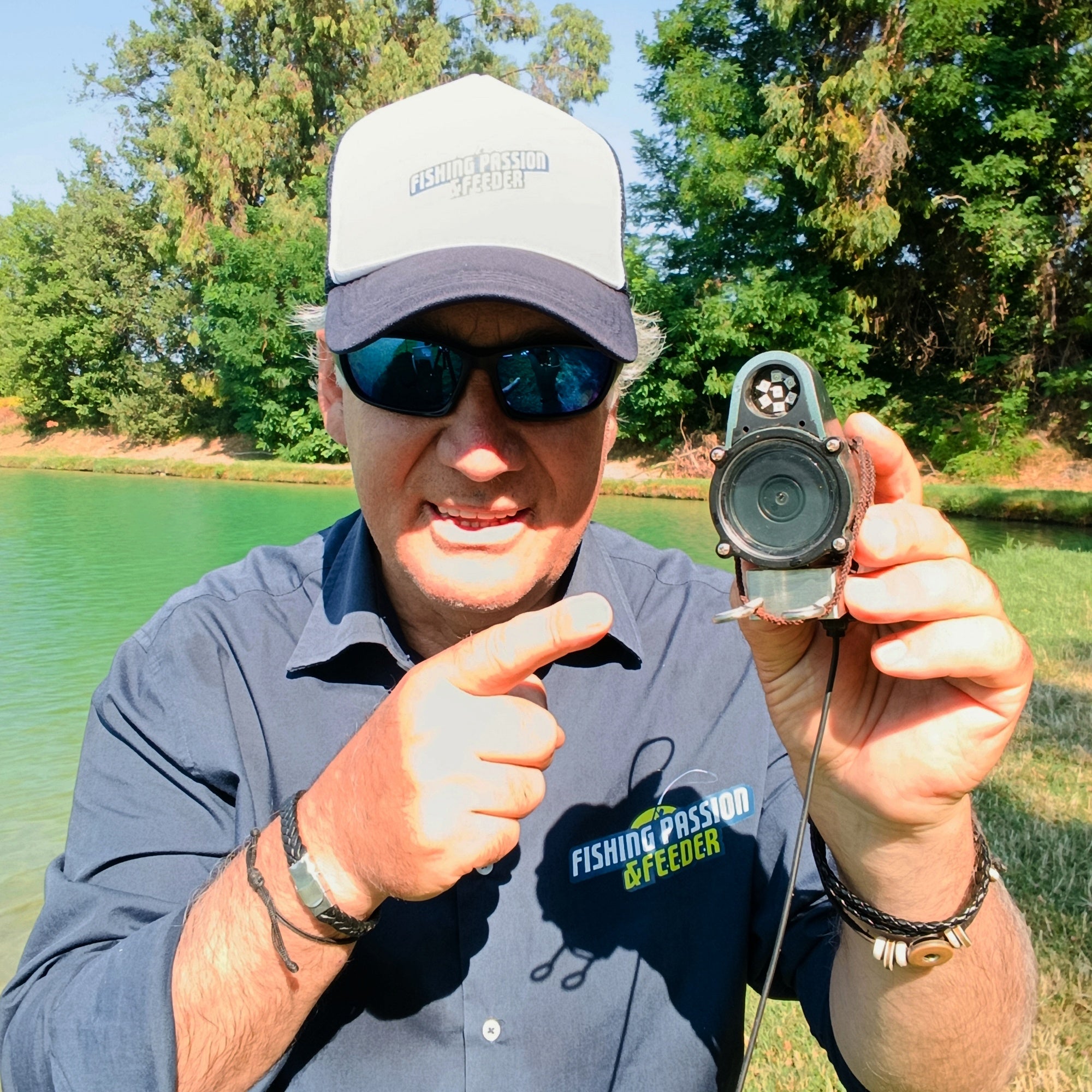
In a fast trolling scenario like Rob’s, the camera needs to be wide enough, steady enough, and clear enough to make the footage useful. Fishing CamX brings together 1080P HD video, a 136° ultra-wide lens, a Sony STARVIS sensor, an F/2.0 aperture, a stabilizing fin design, and waterproof performance rated to 200m / 656ft — making it suitable for real offshore, boat fishing, and trolling conditions.
In Rob Taylor’s video, those features come together as something more than a clean underwater clip. They turn the moment into a replay of the strike.
The mackerel did not vanish. It did not ignore the lure. It found it, chased it, attacked it — and missed by inches.
Fishing has never been only about waiting for the bite. Sometimes, the most valuable part is understanding why a fish came in, why it struck, why it missed, and what you might change the next time.
A real fishing story from the CHASING global community:Rob Taylor | Australian Angler & Fishing Content Creator https://www.facebook.com/share/v/17xMrm7ZEd/