
A bright green frog lure swims straight toward the camera.
As the line pulls it forward, its body rocks gently from side to side while the two legs kick through the water. The closer it gets, the easier it becomes to see the lure’s eyes, hooks, posture, and every movement of its legs.
From the bank, it looks like a simple retrieve. Underwater, every detail of the lure’s action becomes visible.
The footage comes from French fishing content creator Pike Mike. Instead of ending the video with a strike or a fish on the bank, he focuses on a more basic question:
What do these fishing lures actually look like once they are moving underwater?
A Lure’s Shape Is Only Half the Story
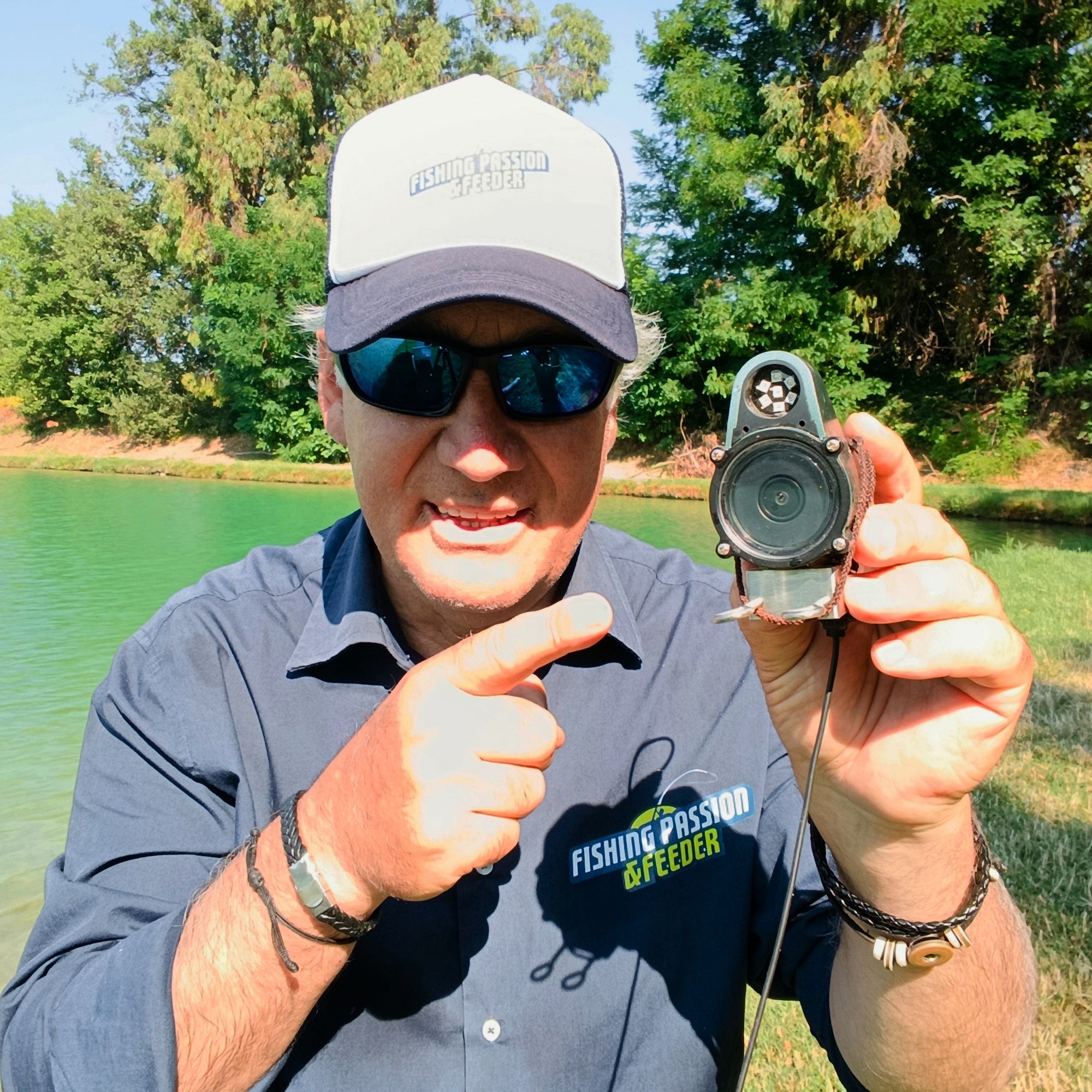
Standing beside a clear stretch of water, Pike Mike holds a red spinning rod and prepares the first lure. He attaches CHASING CanFish Fishing CamX to the line, positioning the camera so that it records the lure behind it.
The first soft bait is a brightly colored frog pattern. Its green body is covered with dark markings, its two legs extend behind it, and the hooks sit close to the top of the lure.
He casts the rig into the water and begins retrieving it.
The video then cuts to the view from the underwater fishing camera.
The frog lure approaches the lens head-on. Each turn of the reel pulls it closer, causing the legs to kick and the body to sway. Details that looked exaggerated while the lure was held on the bank now form part of a continuous swimming action.

This is something anglers cannot fully judge by looking at a lure in its packaging or holding it in their hands.
Color, size, and body shape are easy to inspect before a cast. But whether the lure stays balanced, whether its legs or tail begin moving at the chosen retrieve speed, and whether its action remains consistent can only be properly understood once it enters the water.
A Different Tail Creates a Different Underwater Action
After the first test, Pike Mike retrieves the rig and changes the lure.
The next soft bait has a silver-gray body and two long, curved tails. Its profile is more streamlined than the green frog, while the tail sections appear loose and flexible when held out of the water.
He casts again.
This time, the underwater fishing video shows a very different movement. As the lure is pulled toward the camera, its two curled tails repeatedly open, flex, and sweep back through the water.
The action is more fluid than the pronounced kicking movement of the first frog-style lure. The body profile also changes as the tails move, creating a different underwater outline during the retrieve.

No fish rushes into the frame. There is no sudden strike and no dramatic fight at the end of the line.
That does not make the footage less useful.
In fact, the most interesting part of the test is that it places different lure designs in the same real fishing environment. Their colors, profiles, tail structures, and swimming actions can all be observed underwater instead of being judged only from the bank.
What the Rod Cannot Tell You
Retrieve speed plays an important role in the way a soft bait moves.
Some tails begin working during a slow, steady retrieve. Others need more water pressure before their full action appears. Rigging also matters: if a soft plastic is mounted off-center or begins to slide out of position, its balance and swimming posture may change.
An angler can feel resistance through the rod and reel, but that sensation does not reveal exactly what the tail is doing. After retrieving the lure, it is possible to check for damage, weeds, or a displaced hook, but the lure itself cannot show what happened during the cast.
A castable fishing camera records that missing part of the process.
CanFish Fishing CamX travels with the rig and records the lure during the retrieve. The footage can then be reviewed after the camera is brought back above the surface. Unlike a live-view system, CanFish Fishing CamX is designed to record the underwater session rather than display it in real time.
This does not allow the camera to decide which lure will catch more fish. A single recording also cannot predict how fish will respond under every condition.
What it can show is more direct: whether a lure is producing the action the angler expected.
If the tail barely moves, the retrieve speed can be adjusted. If the body rolls onto one side, the rigging can be checked. If two lures create very different profiles underwater, the angler has more information when choosing between them for a particular depth, water clarity, or presentation.
A movement that previously existed only in the imagination becomes something that can be watched, paused, and compared.
More Than a Fish-Catching Highlight
Many underwater fishing clips focus on the moment a fish follows, investigates, or strikes a lure. Pike Mike’s test is interesting for a different reason.
It shows that an underwater fishing camera can be useful even when no fish appears.
The recording reveals how the lure behaves before any predator enters the frame. That includes the point at which the tail begins to move, whether the body remains stable, and how the lure’s silhouette changes as it approaches.
For anglers experimenting with new soft baits, this kind of underwater fishing video can help connect what they feel through the rod with what the lure is actually doing below the surface.
The camera is not being used only to capture a lucky encounter. It becomes part of a simple testing process: choose a lure, cast it, retrieve it, and review the result.
Which Lure Looks More Natural?
Pike Mike does not declare a winner.
Instead, he casts the lures one after another and allows their underwater movements to speak for themselves. At the end of the original post, he turns the question back to his viewers:
Which lure would you like to see in action next?
There may not be one universal answer to which lure looks most natural. Different lure designs are intended to produce different swimming actions, vibration patterns, and silhouettes. The better choice depends on the water, the retrieve, the target species, and the presentation an angler wants to create.
But before making the next cast, there is one less thing left entirely to guesswork.
With a castable fishing camera recording the retrieve, the lure’s true underwater action is recorded for the angler to see.