For generations, carp anglers have built their understanding of fish behaviour from what they can see above the surface. A trail of bubbles, a fish rolling at dawn or a sudden movement on the line can reveal that carp are nearby. Yet much of what happens beneath the water remains hidden, including how fish approach food, interact with other carp and respond to changing conditions on the lakebed.
Underwater filming has gradually changed that perspective. Instead of relying entirely on surface activity and bite indications, anglers can now observe elements of the feeding process itself. Some of the most interesting discoveries have little to do with catching a fish immediately. They reveal just how variable and complex carp behaviour can be.
A Different World Beneath the Lake
Imagine a small clearing among the weed, scattered with a mixture of boilies, pellets and particles. From the bank, it appears to be an ordinary feeding spot. Beneath the surface, however, the situation can be far more dynamic.
A carp moving into the area may travel slowly along the bottom, occasionally lowering its head towards loose food. Another fish might pass through without stopping, while a third could remain nearby and begin feeding more actively.
These differences are important because carp don't respond to every food source in the same way. Their behaviour can be influenced by familiarity with the area, competition, natural food availability and previous disturbance.
Underwater footage also helps explain why visible fish activity doesn't always correspond with strong feeding activity. Carp may explore a baited area without settling into a sustained feeding pattern. Others may visit repeatedly before spending much time over the feed.
The presence of carp is only one part of understanding what is happening in a swim. Their behaviour provides the rest of the picture.
How Carp Actually Pick Up Food
Carp feed using a highly mobile mouth that can extend forward to draw in food and surrounding water. Their suction-feeding ability allows them to collect items from the bottom and sort material before swallowing.
This process can be surprisingly delicate.
Rather than simply opening their mouths and consuming everything in their path, carp may repeatedly pick up material, manipulate it and expel unwanted particles.
Underwater observations of carp interacting with rigs have shown that a fish can take a hookbait into its mouth and release it without producing the clear bite indication an angler might expect.
The movement of the fish matters just as much as the initial pickup. A carp that remains almost stationary over a concentrated patch of food behaves differently from one travelling between widely scattered boilies.
Watching these movements helps anglers appreciate why bait placement, food size and bottom conditions can affect the way carp feed.
It also explains why the most productive feeding area isn't necessarily the one showing the greatest amount of visible disturbance.
Feeding Alone and Feeding in Groups
Carp behaviour can change when several fish gather around the same source of food.
A solitary carp may approach cautiously and spend time examining an area before feeding. Where several fish are present, competition can sometimes encourage more active movement and quicker feeding.
However, group feeding doesn't always create an immediate opportunity for the angler. Dominant fish may occupy particular sections of a feeding area, while others move around the edges or enter briefly before leaving.
The distribution of loose feed can influence these interactions.
A tightly concentrated bed of particles may keep fish feeding within a relatively small area. Scattered boilies can encourage movement between individual food items, changing the way carp travel across the lakebed.
Neither approach is universally superior. Their effectiveness depends on the venue, season, fish behaviour and the angler's presentation.
The useful lesson is that baiting strategy shapes more than attraction. It also helps shape what carp do once they arrive.
The Lakebed Changes the Feeding Picture
Underwater footage frequently reveals details that would be difficult to judge from the bank.
On clean gravel, individual food items may remain easy to distinguish. Over soft silt, loose offerings can settle into the bottom, while weed and debris may make some food harder to reach.
Carp are well adapted to feeding across different bottom types, but their movements and the visibility of food can vary considerably.
A fish investigating a silty area may disturb sediment and temporarily reduce visibility. On harder ground, smaller movements can be easier to follow.
These details matter when interpreting underwater footage. A cloud of sediment doesn't necessarily prove that a carp has consumed the bait, just as an apparently untouched patch doesn't establish that fish have never visited it.
Good observation requires patience and context rather than drawing conclusions from a few seconds of video.
Turning Underwater Observation into Useful Knowledge
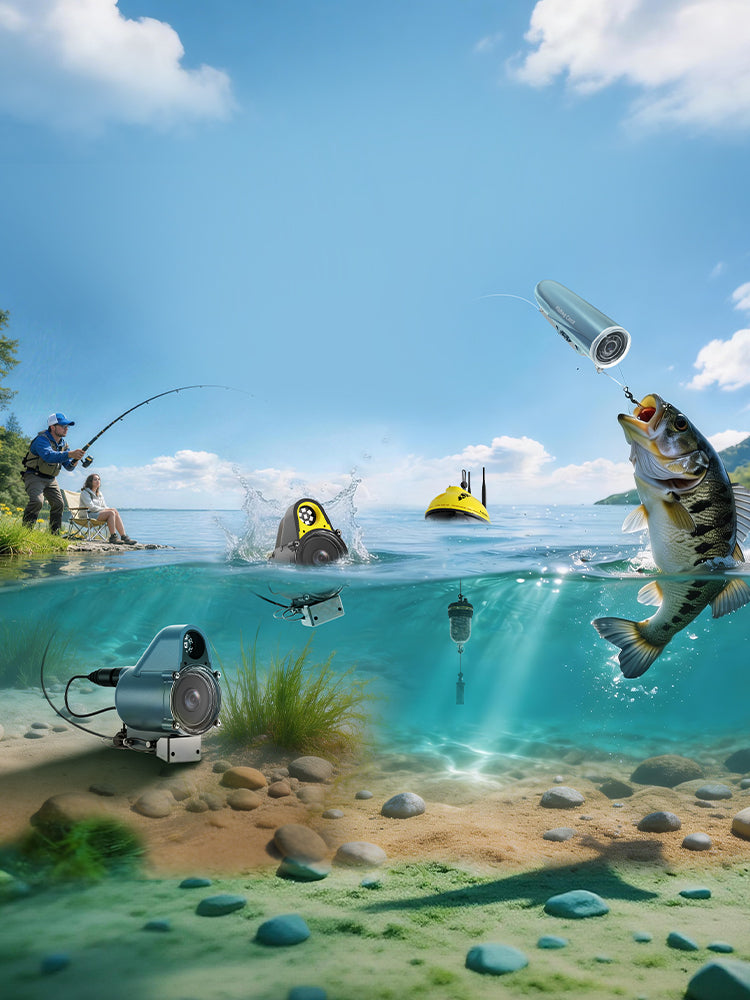
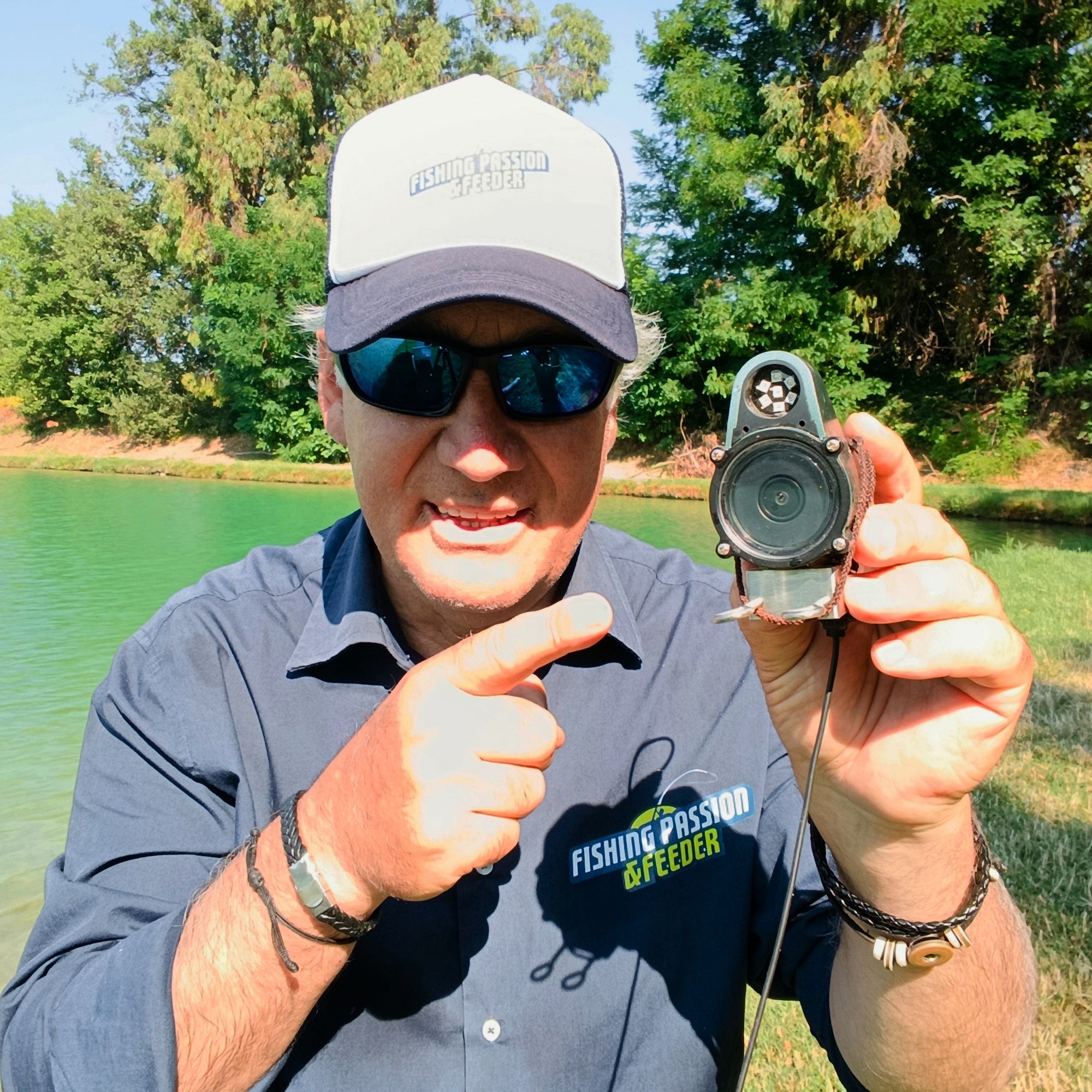
For anglers interested in understanding these behaviours, a live underwater fishing camera offers a practical way to study suitable areas of a swim.
The CHASING CanFish CF1 features a 1080P underwater camera with a 164° wide-angle view, allowing anglers to observe fish movements, bottom conditions and bait interactions through a connected smartphone.

When positioned near a feeding area in sufficiently clear water, it can help reveal how carp approach food, whether other species are present and how the surrounding environment affects what can be seen.
Its value extends beyond checking whether fish are visible. Repeated observations can help anglers distinguish occasional visits from more sustained feeding activity and compare how different baiting approaches influence behaviour.
Camera placement remains important. Suspended particles, poor visibility and an unsuitable viewing angle can obscure details, while a single camera only captures activity within its field of view.
For that reason, underwater footage is best interpreted alongside traditional watercraft, rather than treated as a complete account of everything happening in the lake.

What the Fish Can Teach Us
The greatest contribution of underwater filming to carp fishing may be the way it challenges assumptions.
A quiet swim can still contain fish. A busy feeding area may not produce an immediate take. Food can be inspected, moved or rejected in ways that remain completely invisible from the bank.
These observations encourage anglers to think more carefully about feeding patterns, bait distribution and the relationship between fish behaviour and the lakebed.
They also reinforce an important principle: carp fishing isn't simply about attracting fish to a chosen location. It involves understanding how those fish behave once they arrive.
The more anglers learn to interpret that behaviour, the better equipped they become to make thoughtful decisions throughout a session.
Sometimes the most valuable thing an underwater camera captures isn't a spectacular fish. It's an ordinary feeding moment that changes the way an angler understands the water.