The bait is disappearing. The carp are feeding. Yet your bite alarm hasn't made a sound. What's really happening beneath the surface?
The Most Frustrating Mystery in Carp Fishing
It's a familiar scene on the bank.
You've spent the morning preparing your swim. The rods are positioned, the rigs are carefully presented, and a mixture of boilies, pellets, and particles has been introduced around your chosen spot.
Everything seems right.
A few hours later, small bubbles begin appearing over the baited area. There's an occasional disturbance on the surface. Perhaps you've even spotted the unmistakable shape of a carp moving through the shallows.
The fish are there.
But your bite alarms remain silent.
As the afternoon passes, doubt begins to creep in. Is something wrong with the rig? Are the carp avoiding the hookbait? Should you introduce more bait, change your presentation, or simply wait?
This is one of carp fishing's most frustrating situations: attracting fish to your swim without turning their interest into a bite.
And the explanation is often more complicated than it first appears.
Being on the Spot Doesn't Mean Taking the Hookbait
One of the biggest mistakes anglers make is assuming that carp visiting a baited area must be feeding on everything they encounter.
In reality, a carp's behaviour around food can vary considerably.
A fish might enter a swim, inspect the bottom, pick up a few loose offerings, and move away without touching the hookbait. Another might spend several minutes feeding on tiny particles while ignoring the larger boilie attached to the rig.
Sometimes, fish are feeding confidently, but their movements don't create the conditions needed for effective hooking.
Imagine a carp moving slowly across a patch of scattered boilies. It approaches one piece, lowers its mouth, sucks it in, and continues searching.
Now imagine that same fish feeding over a dense bed of small particles. Instead of travelling between individual food items, it may remain almost stationary, repeatedly taking food from the same small area.
Both fish are feeding. But the way they move—and how the rig responds when they pick up the hookbait—can be very different.
This is why seeing carp activity doesn't automatically mean a bite is imminent.
The important question isn't simply whether carp are feeding.
It's how they are feeding, where they are feeding, and whether your hookbait is part of that behaviour.
The Hidden Problem of Rig Presentation
A carefully tied rig can look perfect in an angler's hand and behave very differently once it reaches the lakebed.
The bottom might be covered in soft silt, scattered gravel, weed, or debris. Any of these conditions can affect how the hooklink settles and how naturally the hookbait is presented.
Consider a rig landing in soft silt.
The lead may sink deeper than expected, pulling parts of the terminal tackle into the bottom. A bait that appeared balanced during preparation may settle differently once submerged.
On a weedy bottom, the hooklink could become tangled or the hook point partially obscured.
Even on clean gravel, the distance between individual stones can influence how a rig lies and moves.
Meanwhile, carp may be picking up free offerings nearby without encountering the hookbait in a way that allows the rig to work effectively.
The lesson is simple: a rig isn't effective just because it looks right before casting.
Its performance depends on the environment in which it lands.
Before making a dramatic change to bait or location, it's worth asking whether the presentation suits the lakebed.
Are You Feeding the Carp Too Well?
More bait doesn't always mean more bites.
In fact, the feeding situation an angler creates can sometimes work against them.
A generous helping of small particles can keep carp interested in a swim for an extended period. But when fish become preoccupied with tiny food items, a larger hookbait may receive little attention.
Similarly, a dense concentration of food can encourage carp to feed within a very small area rather than move between individual offerings.
Movement matters because many carp rigs rely on the fish moving away or changing position after taking the hookbait for the hooking mechanics to work as intended.
This doesn't mean particle baits are ineffective or that spreading bait is always the better choice.
It means the feeding response should influence the approach.
If carp are repeatedly visiting the spot but avoiding the hookbait, consider whether its size, position, or presentation differs too much from the surrounding feed.
A smaller hookbait, a change in buoyancy, or a slightly different distribution of free offerings may sometimes be more useful than adding another large quantity of bait.
But change only one or two variables at a time.
Otherwise, even if the next bite comes, it becomes difficult to understand what made the difference.
What a Quiet Bite Alarm Cannot Tell You
A bite alarm tells you when the line moves enough to trigger it.
It doesn't tell you whether a carp has approached your bait, whether smaller fish have disturbed the swim, or whether the loose feed has already disappeared.
That missing information can lead to unnecessary decisions.
An angler might reel in and recast just as carp are beginning to feed. Another might introduce more bait into a swim where plenty of food remains.
Some may abandon a productive area simply because the bite alarms have been quiet.
Traditional clues still matter. Bubbling, showing fish, line indications, changes in weather, and previous experience can all help an angler interpret a swim.
But none provides a complete picture of what happens around the hookbait.
This is where direct underwater observation can add another useful perspective.
Seeing What the Carp Are Actually Doing
In suitable conditions, an underwater fishing camera can reveal details that remain invisible from the bank.
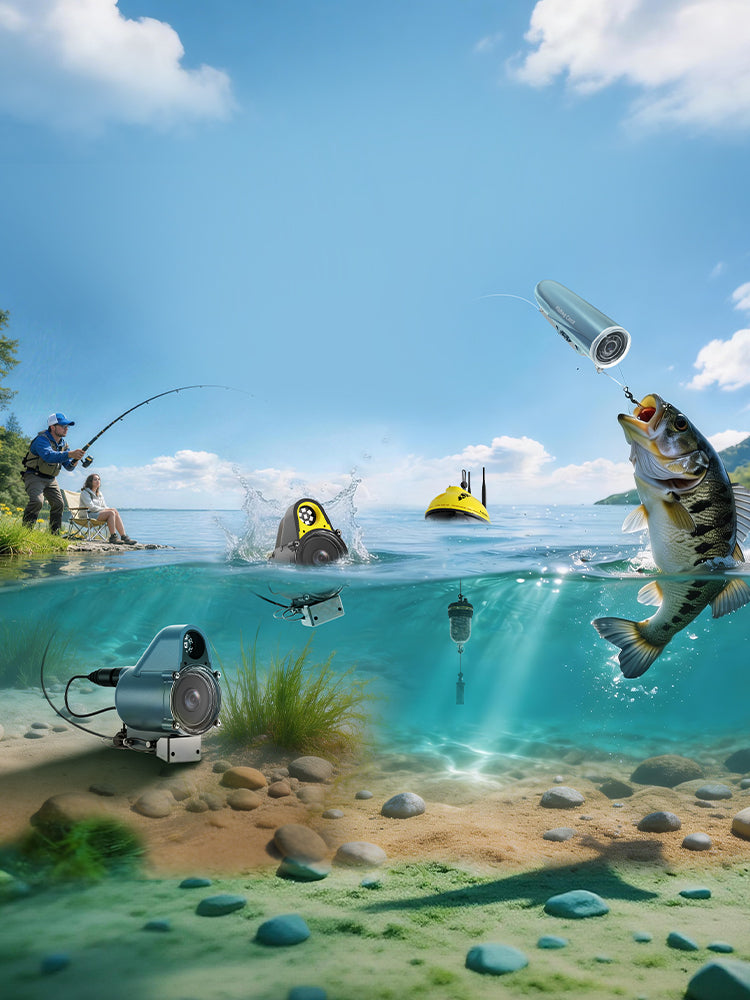
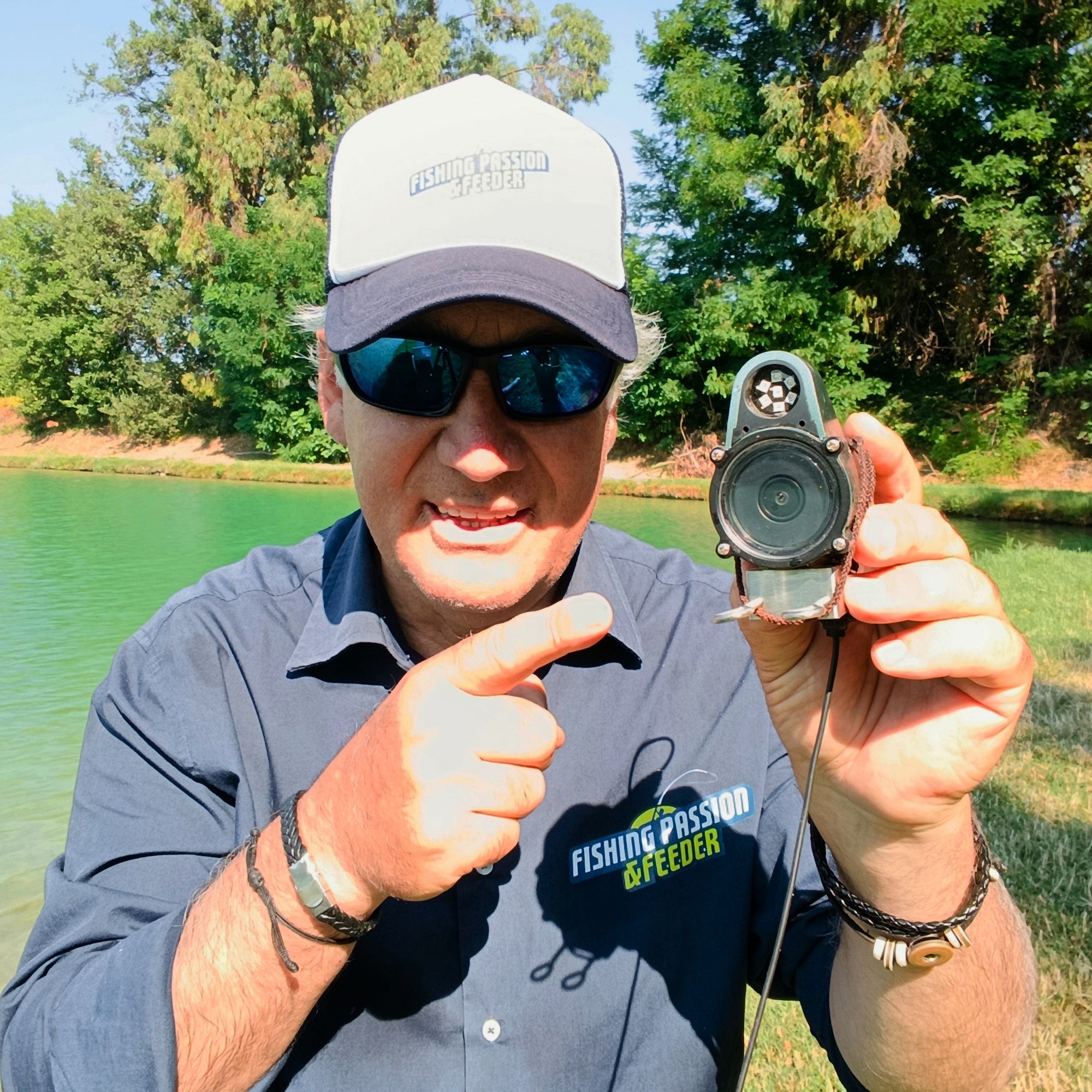
The CHASING CanFish CF1 is designed to provide a live view beneath the surface, allowing anglers to observe underwater environments and fish behaviour through a connected smartphone.

Its 1080P camera and 164° wide-angle view help capture the area around the camera, while its low-light imaging capability can assist in suitable underwater conditions.
For a carp angler investigating a quiet baited spot, the value isn't simply seeing a fish on the screen.
It's observing the relationship between the fish, the lakebed, and the bait.
Where visibility and camera placement allow, an angler may be able to see whether carp approach the feeding area, how they interact with loose offerings, or whether bait remains on the bottom.
That information can help narrow down the problem.
For example, visible feeding activity without any resulting bite might encourage a closer examination of hookbait presentation rather than an immediate change of swim.
If the baited area appears undisturbed, the angler may need to reconsider timing, location, or whether the fish have visited at all.
The camera doesn't guarantee a catch, and it cannot reveal everything happening beyond its field of view. Water clarity, lighting, positioning, and fish movement all influence what can be observed.
But it can replace some assumptions with visible evidence.
And that can make the next decision more informed.
Change Your Approach, Not Everything at Once
When carp are present but bites aren't coming, the temptation is to change everything.
A different hookbait. A new rig. More feed. A recast to another spot.
Sometimes a change is necessary. But constant adjustments can disturb the swim and make it difficult to identify the original problem.
A more useful approach is to work through a few questions.
First, are the fish actually feeding?
Seeing carp near a spot isn't the same as seeing them pick up food. Watch for consistent activity and consider whether the signs could be caused by other fish or natural movement.
Second, is the hookbait presented appropriately?
Think about the lakebed, hooklink behaviour, hook point exposure, and whether the hookbait is positioned where carp are likely to feed.
Third, does the feeding pattern suit the rig?
If the fish are grazing almost stationary over tiny particles, consider whether a different baiting pattern or rig presentation would work better.
Finally, is patience the better decision?
Not every quiet period requires immediate intervention. If there is evidence that carp are visiting the area, repeatedly disturbing it may do more harm than good.
Successful carp fishing often depends on recognising which variable genuinely needs attention.
The Difference Between Attracting Carp and Catching Them
A baited spot can be full of activity without producing a single take.
That doesn't necessarily mean the angler has chosen the wrong location or the wrong bait.
The carp may be feeding selectively. The presentation may not suit the bottom. The fish may be moving in a way that prevents the rig from working efficiently. Or the right moment simply hasn't arrived.
The key is to stop treating every silent bite alarm as evidence of an empty swim.
Carp fishing is a process of observation, interpretation, and adjustment.
Sometimes the most valuable discovery isn't where the fish are.
It's understanding why they're there, what they're doing, and why they haven't taken the hookbait.
Because attracting carp is only the first part of the challenge.
Understanding their behaviour is what helps anglers decide what to do next.